EF News
Caroline Moody spends her working week running a logistics business in Cramlington. On weekends, she’s out in Newcastle’s Bigg Market, supporting vulnerable people as a Street Pastor, and building a route out of homelessness through her charity, Core Foundations.
For Caroline Moody, the concept of community has always been a fundamental part of her identity. Growing up in the North East, she watched her parents involve themselves in local causes, a tradition that she says is effectively “in my DNA”. After years of focusing on raising a young family and growing the family business, Moody Logistics and Storage, the post-pandemic period sparked a desire to return to those roots.
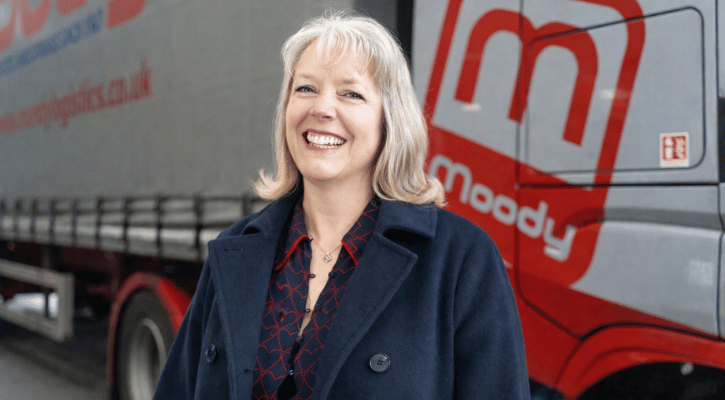
“When we came out of COVID, I said to my husband that I’d love to get involved in some charity work again,” Caroline recalls. “I wanted to do something where I wasn’t the boss, I wasn’t the organiser, and I wasn’t in charge. I just wanted to be part of a team where I could roll my sleeves up”.
That search for a hands-on role outside of her day job led her to Street Pastors, a Christian-based organisation that provides a calming, supportive presence in the city’s nightlife scene.
The reality of Newcastle city centre in the early hours of Sunday morning can be a world away from the professional environment of a logistics hub in Cramlington. Working in teams of three to five, Street Pastors look for vulnerable individuals who have become separated from friends, lost their phones, or are simply incapacitated by alcohol or drugs.
“The first night I was out in the Bigg Market, I was like a rabbit in the headlights,” she laughs. “But you just get on with the job. Most people are quite appreciative of what we do. We’re there to fit between the gaps – if it’s not a police incident, but someone isn’t well or is lost, we can help”.
To provide practical help, the team carries a “survival kit” to support those in need. “You’ll find us carrying a variety of supplies from Mars Bars and bottles of water, to foil blankets and even flip flops for the girls carrying their shoes.” Caroline explains.
“It never comes from a place of judgement, but from a place of caring. I can’t bear the thought of someone stepping in glass, vomit or whatever else the streets might be filled with. We also carry a spare battery pack for when phones have run out of charge. If they’ve lost their friends and their battery has died, they cannot get a taxi home, so we’ll stand with them and have a chat while we charge their phone,” she says.
For Caroline, the work is a practical expression of her faith. “From a Christian point of view, I would say, where would Jesus be if he was here today? He probably wouldn't be in the church pews; he’d be out on the streets with those that needed him”. This commitment has become a family affair, with her husband and both of her children, aged 23 and 25, now serving as Street Pastors. While many interactions involve simple acts of kindness, the role also exposes volunteers to the darker side of the night. Caroline notes that the prevalence of drugs among young adults has become a significant concern.
“When it comes to challenges on the streets, it’s mainly drugs,” she says. “The amount of young adults that have taken drugs is prolific at the moment. They just don't realise how vulnerable they leave themselves when they're incapacitated”. Being the only sober people in the area allows the team to spot dangers that others might miss. “We have had a few occasions where we've managed to intervene because you can see young girls being persuade to get in a taxi with a guy they don't know,” she recalls. Processing these encounters requires a strong support network. “Every night you always come home and you've probably helped somewhere between maybe six and ten people in various situations. We share it with each other and pray about it, and you feel you've made a difference”.
The time spent on the streets fundamentally changed Caroline’s perspective on homelessness. She realised that people often hit absolute rock bottom not just because they lack a roof over their heads, but because they suffer from a poverty of relationships and identity. When individuals find themselves on the street, they often lose who they once were as society turns away, leaving them with no support network to help them recover. This led Caroline and her husband Philip to set up Core Foundation in 2023 – a charity seeking to restore this identity by providing professional empowerment and genuine friendship to help tenants navigate out of their situation and back toward independent life. Philip serves as CEO, overseeing the day-to-day running of the organisation, while Caroline remains heavily involved as Chair of Trustees.

“A roof over their head is just geography,” Caroline says. “Until you get them out of this cycle, which tends to often include prisons, they're never going to move on. Our aim is to get to the root of the problem – help them get over their drug addictions, financial issues, or relationship issues – and move them on to live a full independent life”.
The charity currently operates houses in Hexham and Consett, housing a maximum of two people per property. The model is unique in its partnership with local churches. While professional empowerment workers handle technical support, church volunteers provide genuine friendship. “The church people become friends and support volunteers,” Caroline explains. “They might go for a coffee once a week or a dog walk. They aren't trying to change them; they’re just being friends. That’s what really builds somebody’s character back”.
While many would expect funding to be the biggest hurdle, Caroline is quick to credit the incredible generosity of regional partners. Rather than struggling financially, the charity has been backed by significant external support. “There really are some good people in the world,” she reflects. The foundation’s first property was provided by Karbon Homes, and when they initially struggled to gain a foothold in Hexham, the Vardy Foundation stepped in with a house to get them going.
The kindness extends to private individuals as well. A second home was made possible through churchlinked investors; one person provided £100,000 and another £50,000 as a long-term loan without seeking any acknowledgment. “It's just incredible that somebody would do that,” Caroline says.
Running a logistics business and a charity simultaneously is, as Caroline puts it, a “nightmare” to balance. However, she believes the leadership skills she practises daily are directly transferable.
“Applying the lessons from business definitely helps,” she says. “It’s that resilience of just keep going when it’s tough”.
She is also quick to acknowledge how lucky she has been, which fuels her desire to give back. “We’re all something like three or four pay cheques away from homelessness,” she warns. “If that income stream suddenly stops, we could all be homeless. I've been lucky to be brought up within a family that cares and can step in; people who don't have that network around them don't stand a chance”.
The charity has already seen six people move through its houses and into independent living with jobs. For Caroline, watching someone turn their life around is the ultimate reward. “To watch somebody turn their life around is a privilege. My husband and I are the instigators, but we couldn't do it without everybody else who rallies around”.
Caroline hopes to see the foundation firmly established as a permanent fixture in the region's charitable landscape. “The goal for the charity is probably growth – more houses so we can help more people,” she says. “We want to make sure the charity gets established well enough in the next ten years so that somebody else would carry it on and keep doing the work”.
As she prepares for the foundation’s upcoming fundraising ball, Caroline’s dedication shows no sign of slowing down. Whether she is overseeing her team in Cramlington or patrolling the Bigg Market at 3am, her goal remainsthe same: to use her leadership to champion regional success and support those who have fallen through the cracks.