EF News
Nicola Wood, founder of The Wonderful Wig Company and winner of the Entrepreneurs’ Forum Impact Award for 2025, is on a mission to transform the way we perceive and treat hair loss.
After her own cancer diagnosis, Nicola Wood has spent nearly a decade building a service that prioritises human dignity and psychological support over profit margins.
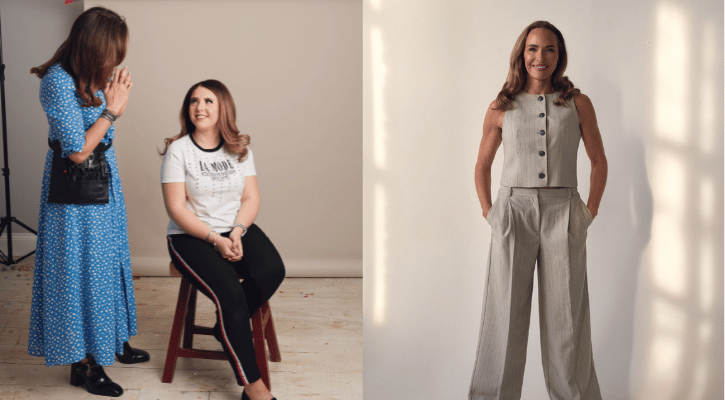
In the bustling city of Sunderland, her remarkable journey began with a dream and a pair of scissors. Opening her first salon at just 21, she spent 15 years building a thriving business, witnessing every day how a good hair day can boost a person’s confidence and mood. But it was an unexpected turn of events in 2016 that would shift her focus from making people look beautiful to helping them feel whole again.
At the age of 36, Nicola was diagnosed with breast cancer. Sitting in the oncology department, she faced the primal fear of her own mortality. Her second question to the doctor, however, was telling: “Am I going to lose my hair?”. “Maybe it was the hairdresser in me, or maybe it was just the woman in me,” she reflects. “I’d spent my life making people feel beautiful with hair, and suddenly the prospect of no more good hair days felt like the cherry on top of the cancer cake”.
While Nicola ultimately did not lose her hair during treatment, her daily hospital visits provided a harrowing window into the lives of those who did. She saw woman after woman burdened by the emotional toll of hair loss, often resorting to ill-fitting wigs that did nothing to restore their sparkle or identity. “It was an epiphany,” she explains. “I remember sitting in the hospital and thinking that maybe this is why I’ve got cancer – so that I could actually make a difference to these people’s lives. I wanted to make the woman who had lost part of themselves feel beautiful”.
Determined to change the landscape of medical hair loss support, Nicola embarked on a period of intense research and training. What she found across the country was disheartening. Poorly prepared wigs by staff who lacked hairdressing experience or the empathy to handle the trauma of hair loss. Taking a leap of faith, Nicola and her husband re-mortgaged their home to build a purpose-built support studio in the back of her Sunderland salon, Kitui.
The goal was to create a service that was the opposite of what she had seen – one that offered technical excellence and psychological understanding. “I went on every course, I went to Europe, I just did everything I could to be the absolute fountain of knowledge for hair loss,” Nicola says. This included two years studying trichology – the science of the hair and scalp – and delving into the psychology of identity and self-esteem.
Nicola’s empathy for her clients is rooted in her own long-term health struggles.
While her cancer treatment did not claim her hair, she has grappled with hair loss for two decades due to an autoimmune condition. “I’ve got rheumatoid arthritis and have to inject methotrexate and it’s just an absolute nightmare for your hair,” she explains. “It’s not about vanity, it’s about not recognising yourself anymore and the mental toll that takes”.
The Wonderful Wig Company launched with a video that quickly went viral, attracting women from across the country who finally felt “heard”. However, as the business grew, Nicola realised that the people who needed the most help were often those who could least afford it. This led to a year-long quest to understand procurement and work with the NHS. “I didn’t have a clue how to do procurement or anything like that,” she laughs. “I went from being a hairdresser to trying to be what I considered a business woman. I joined the NatWest Entrepreneurs Programme to learn about risk and all the business-y stuff I didn’t feel confident in”.
Her persistence paid off in 2019 when she secured her first NHS contract with Sunderland Hospital. Today, the company serves 15 NHS Trusts and covers a vast territory from the Scottish border down to Leeds.
For Nicola, success has never been just about turnover or the number of cities she can expand into. In fact, she recently decided to scale back some of her growth plans to ensure the service remains personal and impactful. “I’ve tried a couple of models across the country, like franchises, but it dilutes the service,” she admits. “I want to know every single person in my team personally. I’d rather make the most powerful impact on 100 people than a diluted impact on a million”.
This focus on quality over quantity is what led to her receiving the Entrepreneurs’ Forum Impact Award for 2025. Success for Nicola is measured in the restoration of a person’s identity. She tells the story of Mary, a woman who had lived with alopecia for 30 years and was so ashamed she wouldn’t even let her husband see her without her wig. “In that moment, I am not a hairdresser or a trichologist. I am simply a human hearing another human,” Nicola says. Through months of support, Mary eventually felt comfortable enough to sit in the salon without her hair. “How liberating to be fully seen for the first time in 30 years”.
The business also runs a wig bank, where people can donate wigs to be upcycled and given to those who cannot afford one. Regardless of the service you visit Nicola for, the time, care and dedication is given in equal amounts.
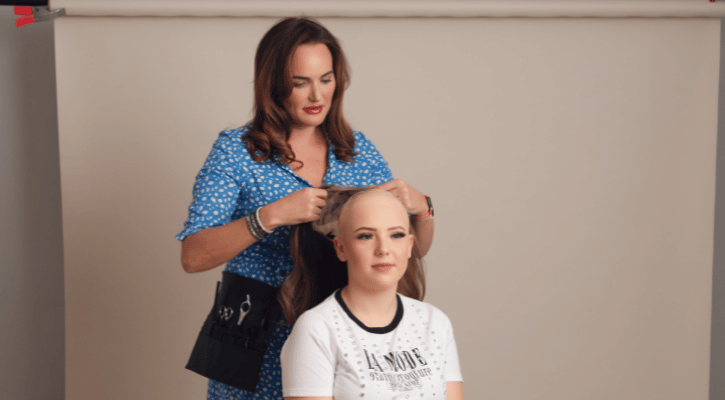
Balancing the roles of “Hairdresser Nicola” and “Business Nicola” has been one of her greatest challenges. At one point, she stepped away from the salon floor to focus entirely on growth, only to find herself burnt out and unhappy. “I realised that my passion is being with people,” she reflects. “I went back to the salon two days a week. I take off that data-driven numbers head at the door and just be a hairdresser where everything comes naturally. When I do have my office days, I’m actually more productive because I’m happier”.
Nicola has now run her salon for 25 years, but the building’s heritage as a hairdressing space stretches back half a century before she even bought it; she now holds the ambitious goal of reaching a full century of hairdressing within those same walls.
The balance of both roles allows her to focus on broader impact, such as influencing the curriculum for future hairdressers through her board position at City and Guilds. She also conducts free educational seminars for doctors and nurses to improve the limited information currently available within cancer services. “I want to unify the information that’s out there,” she says. “I’ve worked with Newcastle University to prove academically that this stuff matters and that it makes a difference to patient outcomes”.
Looking ahead, Nicola is focused on using her voice to spread awareness through her book and her TED talk, which has already been watched over 30,000 times. She is also working on measuring the social impact across her business to ensure that no one faces hair loss unsupported, regardless of their background or financial situation. “When I got cancer, my son was six, and I wanted to leave some lasting legacy work that he would be proud of,” she shares. “Now he’s 17, and I’m driven by the fact that I’ve lived a fuller and more impactful life in the last nine years than I did in the previous 30”.
For the next generation of entrepreneurs, Nicola’s advice is simple: trust your intuition. “It’s my intuition I swear by. If a feeling doesn’t feel right, I try not to do it, and I’m generally proved right”. Nicola Wood is more than just a business owner; she is a pioneer who has turned a personal crisis into a national movement. By redefining what beauty means and validating the significance of hair loss, she is ensuring that for the thousands of people she helps, hair is never “just hair”.