EF News
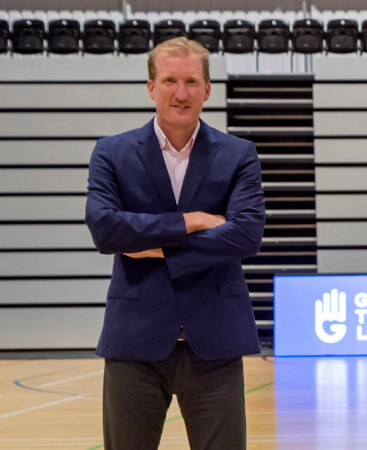
Newcastle Eagles is, at its core, a family business. Run by managing director and owner Paul Blake and his wife Sam, chief executive of the Eagles Community Foundation, the club has evolved from a vulnerable franchise into the most decorated team in British basketball history. Alongside the men’s and women’s professional sides, the organisation now encompasses a purpose-built arena and a charitable foundation that reaches thousands of young people every week across the North East.
At Vertu Arena, that impact is most visible at weekends, when the building fills with the foundation’s junior league. Close to 180 teams (representing 13 junior clubs from Tyne and Wear and Northumberland) play across two full days, supported by volunteers, coaches and officials who have often come through the system themselves. It is a far cry from the limited regional activity Paul inherited when he first took over the club in 1999.
“It’s the most magical atmosphere,” Sam says. “Youngsters enjoying sport, parents watching from above, people meeting who might never otherwise have crossed paths. And increasingly, it’s the young people themselves who are running the league.” What began as a two-court operation in their old venue has grown into a busy community hub that the Blakes and their team are already struggling to fit under one roof. Paul’s journey with the Eagles started long before the arena doors opened to local families. In the late 1990s he was marketing manager at Newcastle United Sporting Club, the ambitious project led by Sir John Hall that brought rugby, basketball and ice hockey under the same umbrella as the football club. When that business model came to an end in 1999, the basketball team’s future looked uncertain. However Paul and his then boss, chief executive KenNottage, were offered the chance to take the club over for £1. Sir John cleared the losses and handedthem a clean slate – and an exciting, yet daunting opportunity.
“I took the club over in August 1999 and here we are 26 years later,” Paul reflects. Back then, the team was playing out of Newcastle Arena, having relocated from Sunderland a few years earlier. Crowds were respectable but far from guaranteed, and the wider basketball landscape in the region was sparse. “There was a job to be done,” he says. “If we were staying in a 7,000-seat arena, we had to build an audience.” For the next decade, he and a small team worked tirelessly to fill those seats, gradually edging average attendances up towards the 3,000 mark and occasionally selling the place out.
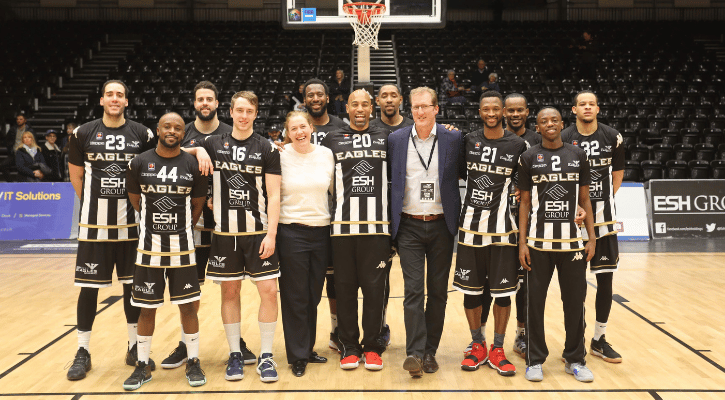
That period laid the groundwork for what would become the most decorated team in British Basketball League history. The first trophy under Paul’s ownership did not arrive until 2005 – six years into the journey – but once the breakthrough came,silverware followed regularly. Yet for all the on-court success, Paul is clear that the real business model was never about quick wins. “From the start our focus was building the sport in the local community, particularly for young people,” he explains.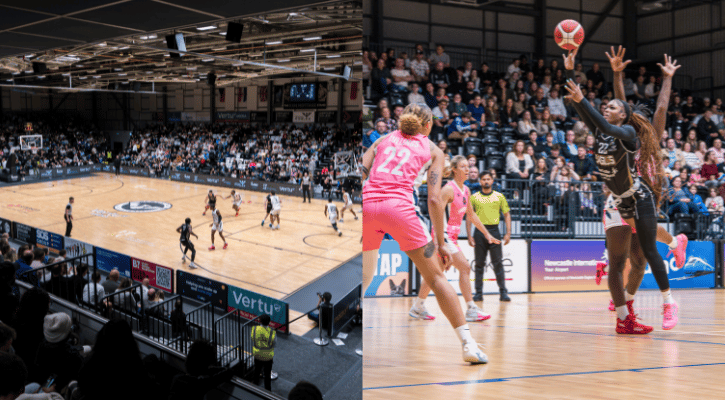
That philosophy demanded infrastructure, not just enthusiasm. After leaving Newcastle Arena, the club spent nine years at Northumbria University’s Sport Central while Paul quietly explored whether they could build a home of their own. The goal was simple to say and difficult to deliver – a venue the club could control for community use, secondary spend and long-term security. In January 2019 that ambition became reality when the doors opened at what is now Vertu Arena, Scotswood Road, a purpose-built venue that houses both the professional teams and the charitable arm, the Eagles Community Foundation.
Sam leads that foundation as chief executive, overseeing an operation that now supports nearly 180 teams across 13 junior clubs in Tyne and Wear and Northumberland. Week in, week out, those teams feed into the junior league that takes over the arena at weekends. “Our ambition has always been to build an infrastructure that lets young people and their families find the right path for them,” she explains. “Whether that is playing, coaching, officiating or volunteering, we want them to leave in a better position than when they first walked through the doors.” Alongside the leagues and clubs, the foundation runs a performance academy, mentoring programmes for young referees and officials, and courses that allow teenagers to gain governing body qualifications. On any given weekend, it is not unusual to see a teenager who started in the mini league now refereeing games, table officiating or supervising younger age groups. “It’s the most empowering display of giving back,” Sam smiles. “Young people pay back to their own community by making opportunities possible for others.” That sense of opportunity matters in a sport that, Sam points out, often sits outside traditional structures. Basketball is the number two team sport for 5 to 16-year-olds in England, yet the funding picture does not always reflect that popularity. “We talk about a cultural disconnection,” she says. “There are huge numbers of young people playing, but the support systems don’t always see or value that. We want to lobby on their behalf, because what we are really doing is developing rounded individuals with resilience and confidence. Winning games is secondary to that.”
Paul sees that same cultural shift at a global level. For years, British basketball was lazily labelled an American import, something he is keen to challenge. “Basketball is a world sport,” he says. “You wouldn’t tell another country that football is English. The same applies here – every country is playing in the World Cup and the Olympics.” Across Europe, basketball is the second biggest sport and in some countries it even eclipses football. With London clubs now competing – and winning – in European competitions and talk of an NBA-style Europe league on the horizon, he believes the game’s profile in the UK is only heading one way.
That momentum does not make running a professional club any easier. Cashflow is a constant concern, particularly in a league where some rivals are prepared to absorb substantial losses in pursuit of rapid growth. “Trying to run a pro sports business at break-even or profit is the exception, not the rule,” Paul admits. The Eagles aim to operate sustainably, yet they still face the same operational headaches as much larger organisations – arena maintenance as the building ages, unexpected issues like roof damage and the day-to-day challenges that come with managing live events. The solution, as with many growing businesses, has been a small but fiercely committed team willing to juggle multiple roles. “We have some extremely hardworking staff who keep all the plates spinning,” Paul says. Sam agrees. “It’s very selfless being here. People give so much of their time, work beyond their hours and could probably move up the ladder elsewhere, but they choose to stay because they believe in what we’re building.” Many have been with the organisation for 20 years or more, including chief operating officer Susan, whom Sam describes as an “unsung hero” at the centre of everything.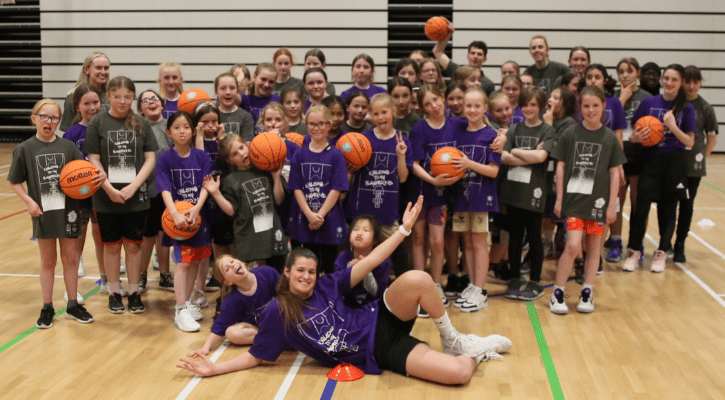
Running the club and foundation as a married couple adds another layer to that dynamic. Sam laughs when asked whether their roles ever overlap. “We’ve worked together for 25, 26 years,” she says. “We absolutely clash – we’re both very strong willed – but we share the same passion to make this the best it can possibly be.” Paul focuses primarily on the professional men’s and women’s teams while Sam leads the foundation, yet their goals are tightly aligned. Both measure success less by trophies and more by the number of people walking through the doors and the impact the sport has on their lives.
That shared vision is particularly evident in the women’s game. The Eagles now run a competitive professional women’s team that plays in Super League Basketball, applying the same long-term strategy that contributed to the men’s success – building participation from the grassroots up and securing the right sponsorship. In a country where netball still dominates in many schools, growing the knowledge base for basketball among girls and young women will take time, but Sam is encouraged by the numbers already coming through the system and by the appetite they see locally.
Both the men’s and women’s teams now compete in our leagues, collectively known as Super League Basketball, further strengthening the club’s unified pathway and identity across the sport.
Looking ahead, neither Sam nor Paul has any intention of slowing down. “We don’t want to stand still,” Sam says. “The moment we say it’s as good as it’s going to get is probably the time we need to hand it over.” Their ambitions include extending the Vertu Arena with more courts and seats, deepening the pathway from junior leagues to the professional teams and continuing to campaign for equitable funding and media coverage for basketball and other under-recognised sports. Above all, they want to reach more young people who could benefit from the sense of belonging the Eagles community provides.
As the conversation draws to a close, Sam offers a message to Forum readers and the wider business community. “If anyone reading this would like to get involved, in whatever way, please get in touch,” she says. “The North East community is all about supporting one another and we wouldn’t be here without that support because we don’t receive the same funding as other sports. We’re only here because our beautiful North East wants us here – and we never take that for granted.”
Together, Paul and Sam have built a franchise that wins titles, yes – but more importantly, they’ve built a club that makes a difference.